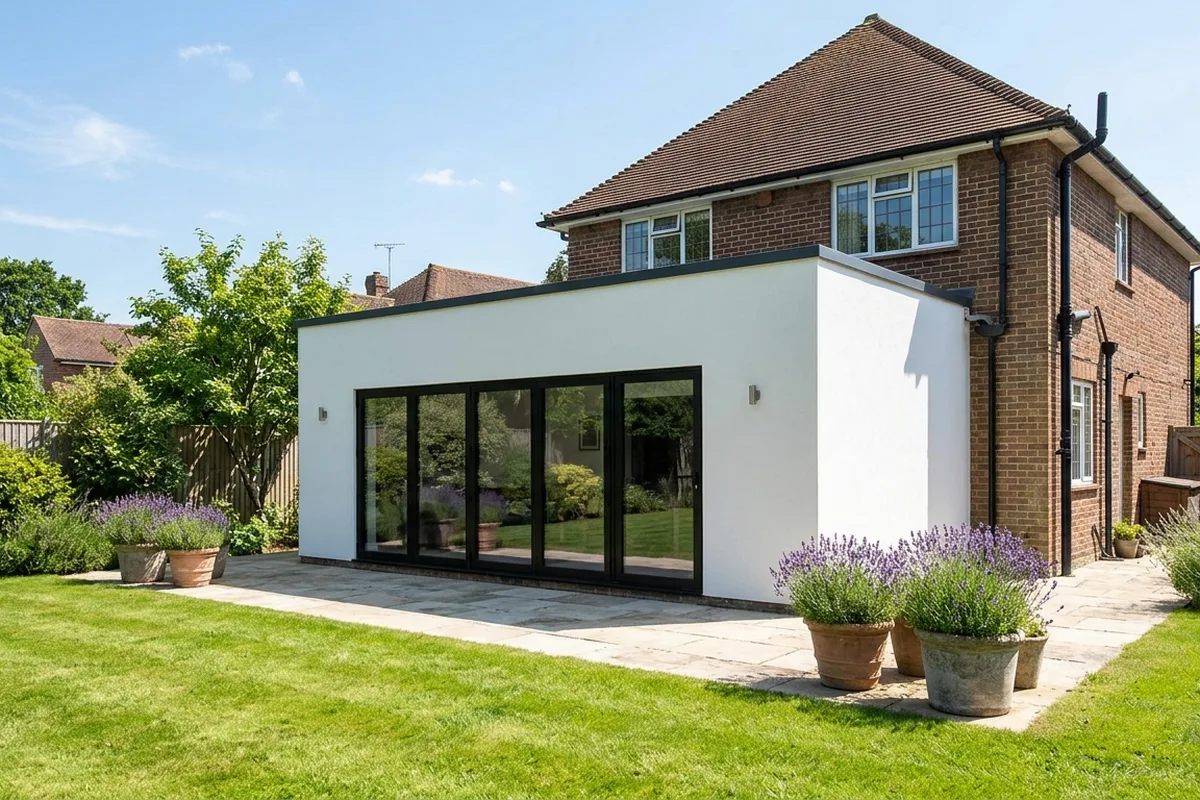
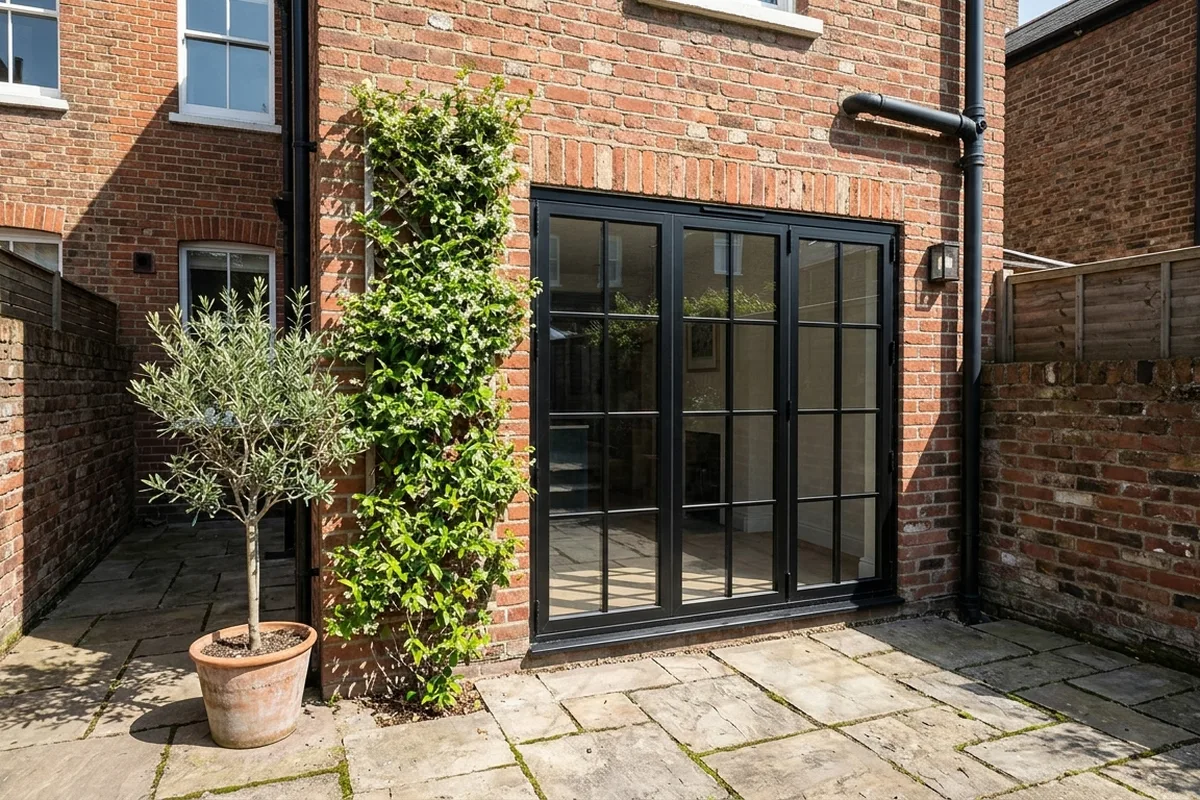
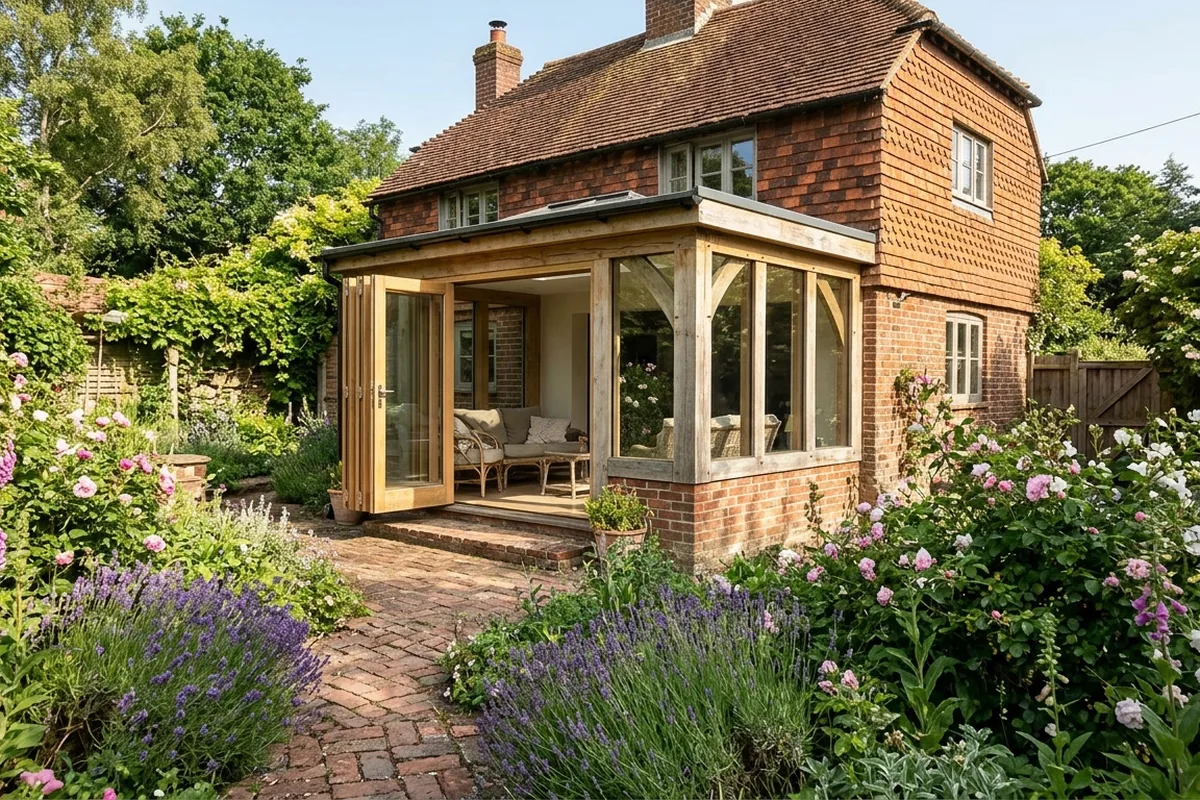
Bifold door fitting and FENSA sign-off in Haywards Heath
Haywards Heath, Burgess Hill, Lindfield and Cuckfield
A bifold set is only as good as the day it goes in. The frame has to be square, level and fixed so that every leaf folds without catching.
What good fitting looks like
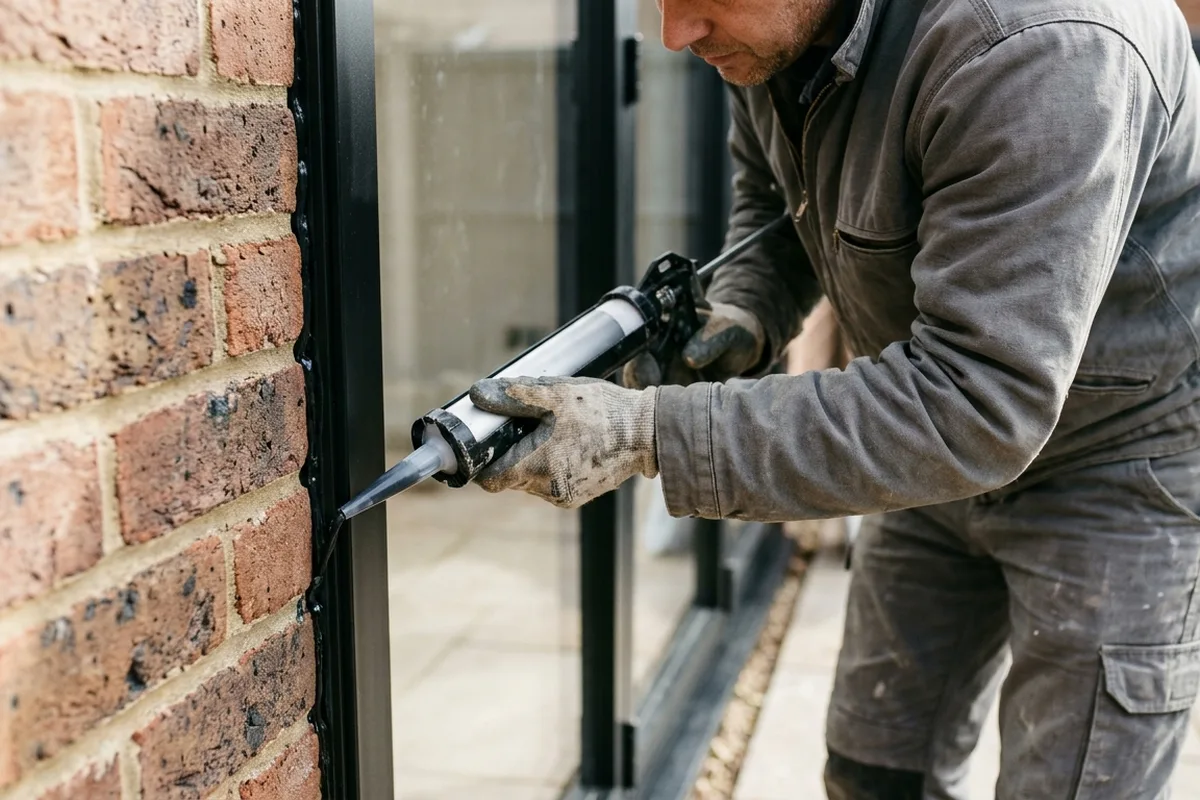
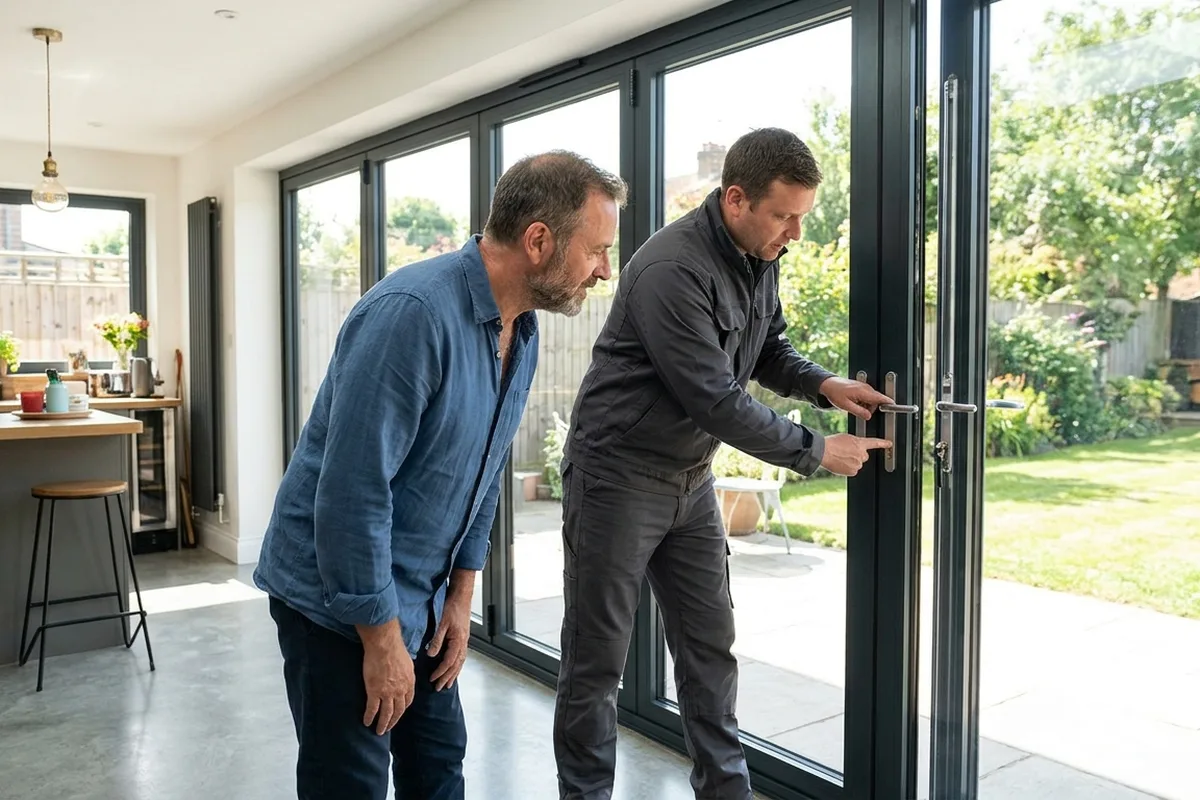
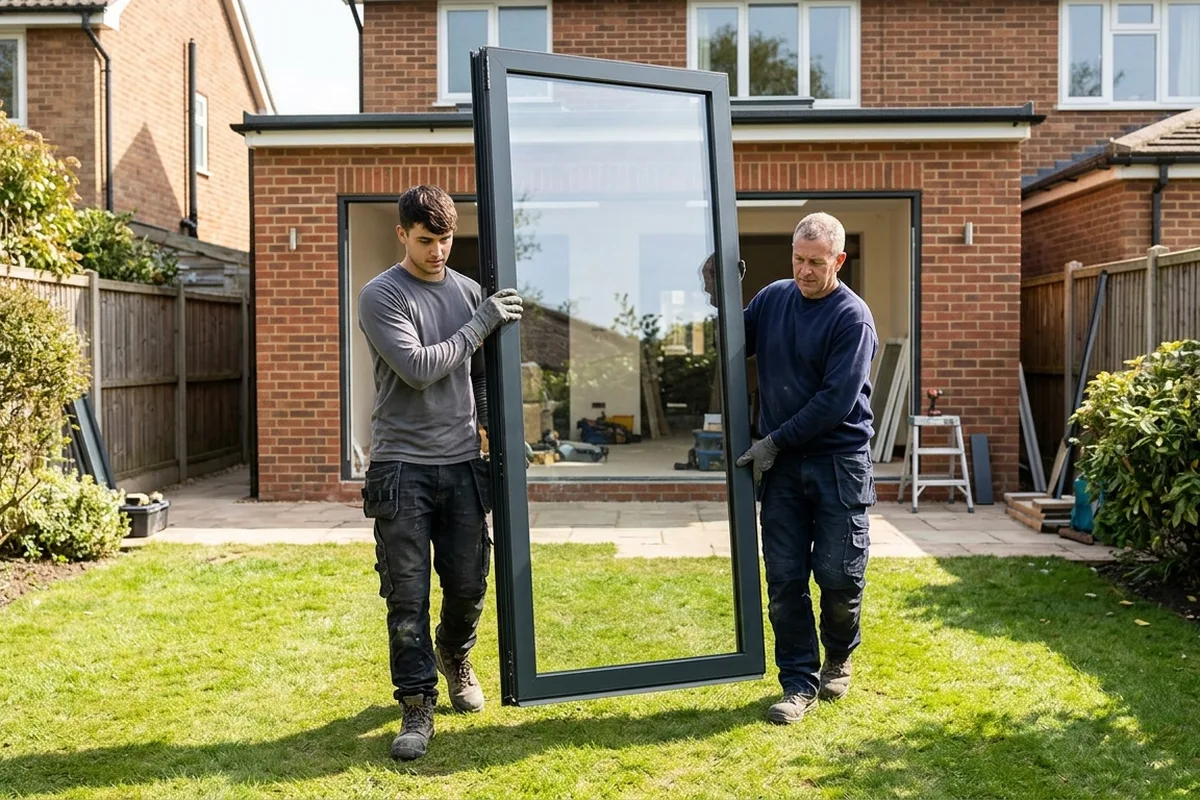
The old doors come out and the opening is checked for level and square. The frame goes in on packers, is fixed into the masonry and checked again before the leaves are hung. Then each leaf is adjusted so the set folds smoothly and the locks engage without force.
The gaps are sealed inside and out, the threshold is bedded and the drainage tested with water. Most replacement sets in an existing opening take a day or two. You are shown how the locks and the traffic door work before the fitters leave.
FENSA or building control?
Replacing an outside door that's more than half glazed is controlled work under the Building Regulations. A company registered with FENSA, the competent person scheme for windows and doors, can self-certify it. The installer registers the job and FENSA sends you a certificate. When you sell, the buyer's solicitor will want to see it.
New openings and extensions are different. Building control signs off the beam, the opening and the doors as part of the building work. So the doors appear on the completion certificate instead.
When you place your enquiry, you'll be contacted by a FENSA-registered window and door company with a local showroom you can visit. They'll arrange a free home consultation, give you a quotation, and survey if you go ahead.
The rules a new set of bifolds has to meet
Self-certifying under FENSA means the installer confirms the doors meet the right parts of the Building Regulations. For a replacement door, these are the ones that matter.
- Energy (Part L)
For a replacement door fitted to a home that's already built, Approved Document L (2021 edition) sets the cap at 1.4 W/m²K. The figure is for the whole door set, frame included.
- Safety glass (Part K)
The rules treat door glass as a high-risk spot for impact, so toughened or laminated glass is required. Large panes close to the floor are just where that matters.
- Ventilation (Part F)
The room must not end up with less background ventilation than it had. If the old doors had trickle vents, the new ones may need them too.
- The opening itself
If the opening is widened, the beam and any padstones are structural work. That goes to building control. In Mid Sussex towns such as Burgess Hill and East Grinstead, that's the district council's own team, or a registered building control approver your builder appoints.
Ask what guarantee comes with the doors and the fitting, and who backs it if the company stops trading. Keep the FENSA certificate, the guarantee and the quotation with the house papers.
For a quick check on what your job needs signing off, ring 01444 719602 or book a 15-minute call.
Fitting and FENSA: common questions
Do I get a certificate for replacement bifolds?
Yes, when a FENSA-registered company replaces doors in an existing opening. The certificate comes after the work is registered. Keep it with the house deeds.
What if the bifolds go into a new extension?
Then building control signs them off with the rest of the extension. Your builder or architect will have made the building control application.
Does a wider opening need a structural engineer?
Usually. Widening or forming an opening needs a beam that an engineer has sized and building control has approved, and your builder puts it in before anyone measures for the doors.
Will my new bifolds need trickle vents?
Only if taking out the old doors would leave the room with less ventilation than it had. If the old doors or windows had vents, expect the installer to keep that level of ventilation, either in the doors or elsewhere in the room.
What if the installer is not FENSA-registered?
Then building control has to approve the replacement, which means an application and a fee before the work starts. The installer or your builder should make it.
How do I check a company is registered?
Use the search on the FENSA website linked above to look the company up before you sign anything.
I have lost my certificate. What now?
FENSA can supply a copy for work it has registered. Ask for it well before you sell, so it does not hold up the conveyancing.
Book a free 15-minute call
Give a door specialist the rough width, and a photo if you have one. You get plain advice on the layout, and a written price after a free home visit if you decide to take it further.